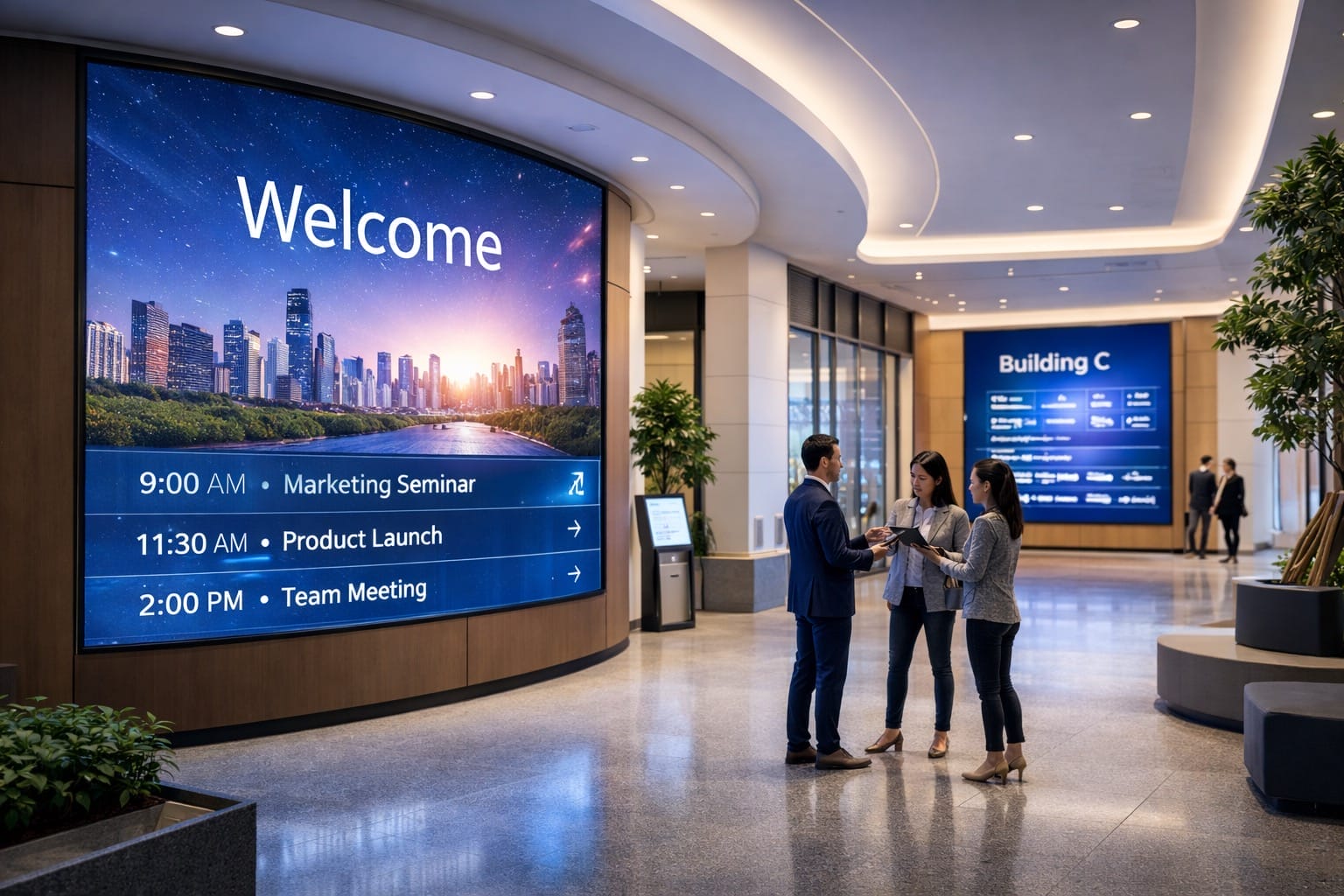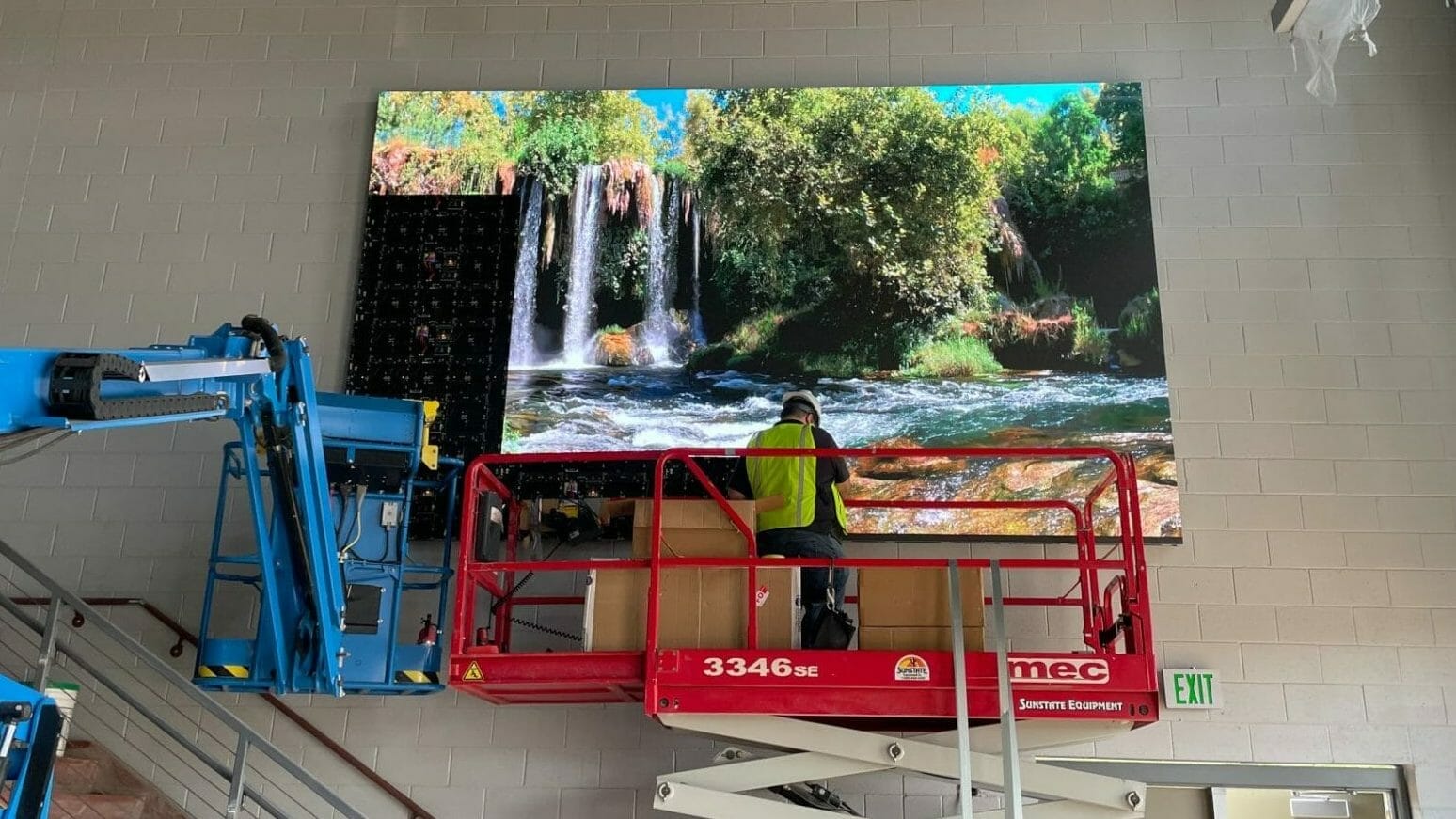
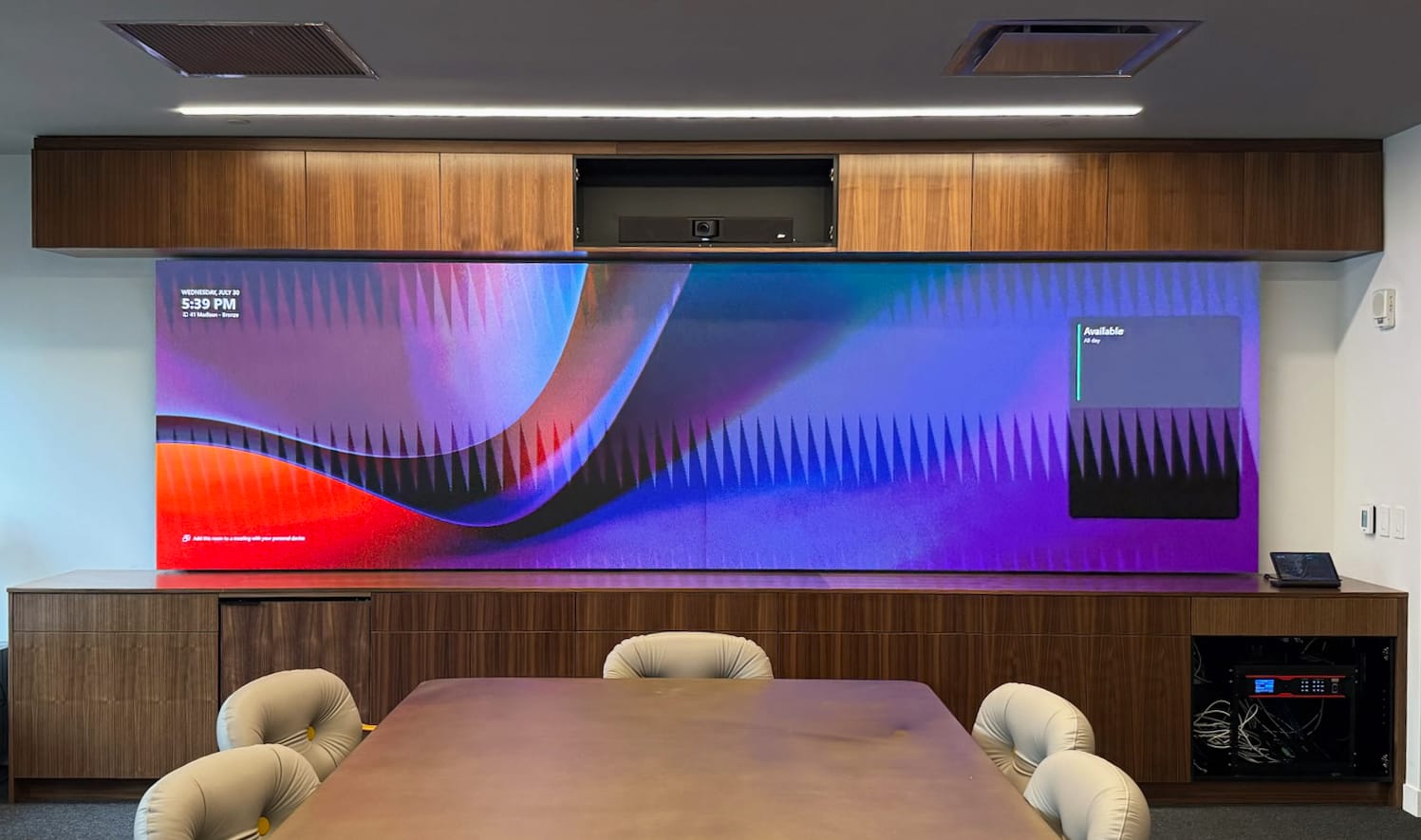
For decades, organizations relied on TVs, projectors, and tiled LCD video walls as the standard solution for large-format displays. Whether in corporate meeting rooms, classrooms, retail environments, or houses of worship, these technologies defined how visual communication worked.
But that standard is changing.
Advancements in LED technology have shifted the market, making LED displays a practical replacement for traditional screens in everyday environments—not just stadiums or outdoor billboards.
Today, more organizations are moving away from conventional display systems and choosing LED as their long-term solution.
LED at Work
See How Purdue University Used LED in Their Brand Studio
The Limits of Traditional Displays
Traditional display technologies still serve a purpose, but many organizations are running into the same challenges.
Large TVs are limited by size. Once a space requires something bigger, multiple screens must be tiled together, creating visible bezels that interrupt the viewing experience.
Projection systems struggle with brightness, especially in rooms with natural light. Maintaining image clarity often requires dimming lights or adjusting the environment around the technology instead of the other way around.
LCD video walls improve scalability but introduce new complications, including alignment issues, maintenance requirements, and visible seams between panels.
As expectations for visual communication continue to rise, these limitations become harder to ignore.
What Changed in LED Technology
LED displays were once reserved for massive venues because of viewing distance and cost. That perception no longer reflects reality.
Modern fine-pitch LED technology allows viewers to stand much closer to the screen while maintaining sharp image quality. Improvements in panel design, calibration, and manufacturing have made LED suitable for indoor environments where clarity and detail matter.
At the same time, installation has become more efficient, maintenance requirements have decreased, and energy performance has improved.
The result is a display technology that combines scale, brightness, and seamless visuals without the compromises of older systems.
Where LED Replacement Is Happening Now
This transition is already underway across multiple industries — here’s a few where we’re seeing the most impact taking place:
Corporate Environments
Boardrooms and collaboration spaces are replacing projector setups and multi-screen TV walls with seamless LED displays that support presentations, video conferencing, and real-time data visualization.
Education Spaces
Schools and universities are upgrading lecture halls and common areas with LED displays that remain visible in bright environments while reducing long-term maintenance compared to projection systems.
Retail and Commercial Spaces
Retailers are moving beyond traditional digital signage toward LED displays that create immersive brand experiences and adaptable promotional messaging.
Houses of Worship
Many worship spaces are transitioning from projection to LED to achieve consistent brightness, clearer visuals, and improved visibility throughout large rooms.
Across these environments, the motivation is the same: reliability, flexibility, and long-term performance.
Looking Beyond Upfront Cost
One of the most common comparisons between LED and traditional displays revolves around the initial investment. While LED systems may carry a higher upfront cost than TVs or projectors, organizations are increasingly evaluating total cost of ownership instead.
LED displays typically offer:
- Longer operational lifespan
- Reduced maintenance and replacement cycles
- Consistent brightness over time
- Lower downtime risks
- Greater scalability without replacing entire systems
When viewed over several years of operation, many organizations find LED to be the more sustainable and cost-effective solution.
Why This Shift Is Accelerating Now
Several factors are driving faster adoption.
Workplaces expect better collaboration tools. Retail environments demand stronger visual engagement. Educational institutions and public spaces require flexible communication systems that can evolve over time.
At the same time, expectations shaped by consumer technology have raised the bar for visual quality everywhere.
Organizations are no longer satisfied with displays that simply function—they want systems that enhance communication, adapt to changing needs, and remain relevant for years to come.
LED technology now meets (and exceeds) those expectations.
Rethinking Your Next Display Investment
Choosing a display solution is no longer just about screen size or resolution. It’s about selecting technology that supports long-term communication goals.
LED displays provide a seamless, scalable solution capable of replacing traditional TVs, projection systems, and LCD video walls across a wide range of environments.
As more organizations rethink how they communicate visually, LED is quickly becoming the new standard.
If you’re planning an upgrade or evaluating options for a new space, now is the time to consider what modern display technology can offer.
Explore Firefly LED’s indoor display solutions or connect with our team to discuss the right approach for your next project.