If you’ve been researching LED displays lately, you’ve probably come across the term COB. It’s showing up more and more — at trade shows, in product specs, and in conversations with display manufacturers. But what does it actually mean, and does it matter for your project?
Here’s a straightforward breakdown.
The LED display technology most people know
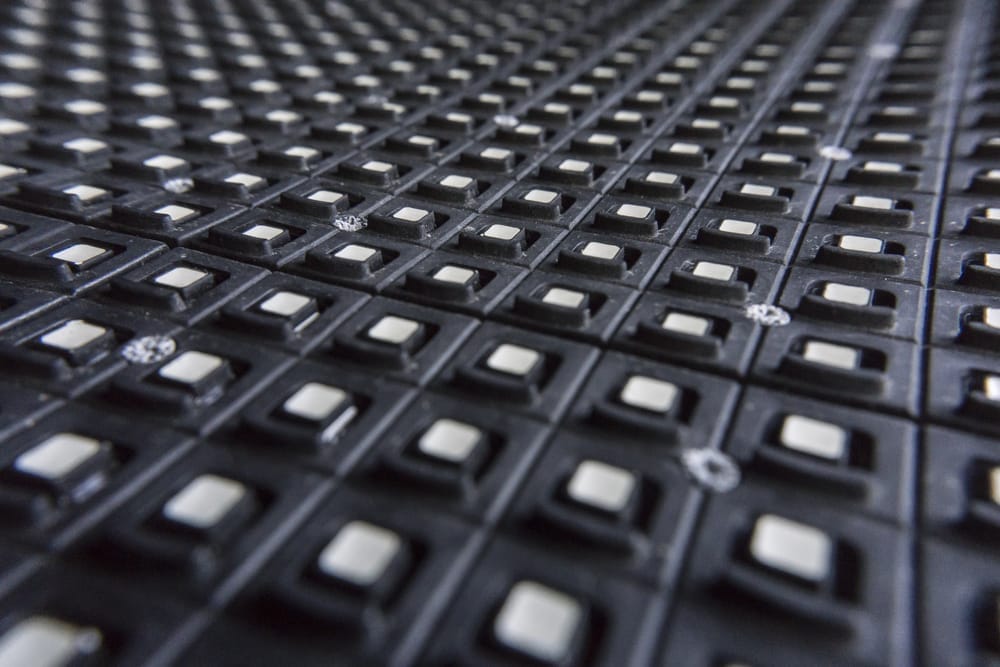
Most LED displays on the market today are built using SMD technology: Surface-Mounted Device. It’s been the industry standard for over a decade, and for good reason. SMD works by packaging individual red, green, and blue LED chips into small units, then mounting those units onto a circuit board to form pixels.
The result is a reliable, cost-effective display that works well across a wide range of applications — outdoor advertising, stage rentals, large-format signage, and more. SMD is everywhere because it delivers solid performance at a competitive price, but it has it’s limitations.
Because SMD displays are made up of individual, discrete components, they have visible gaps between pixels. At close viewing distances, you start to see the grid. The individual chips also sit exposed on the board, making them more vulnerable to impact and moisture. And pushing SMD to very fine pixel pitches (below about P1.25) gets technically difficult to achieve.
What COB does differently
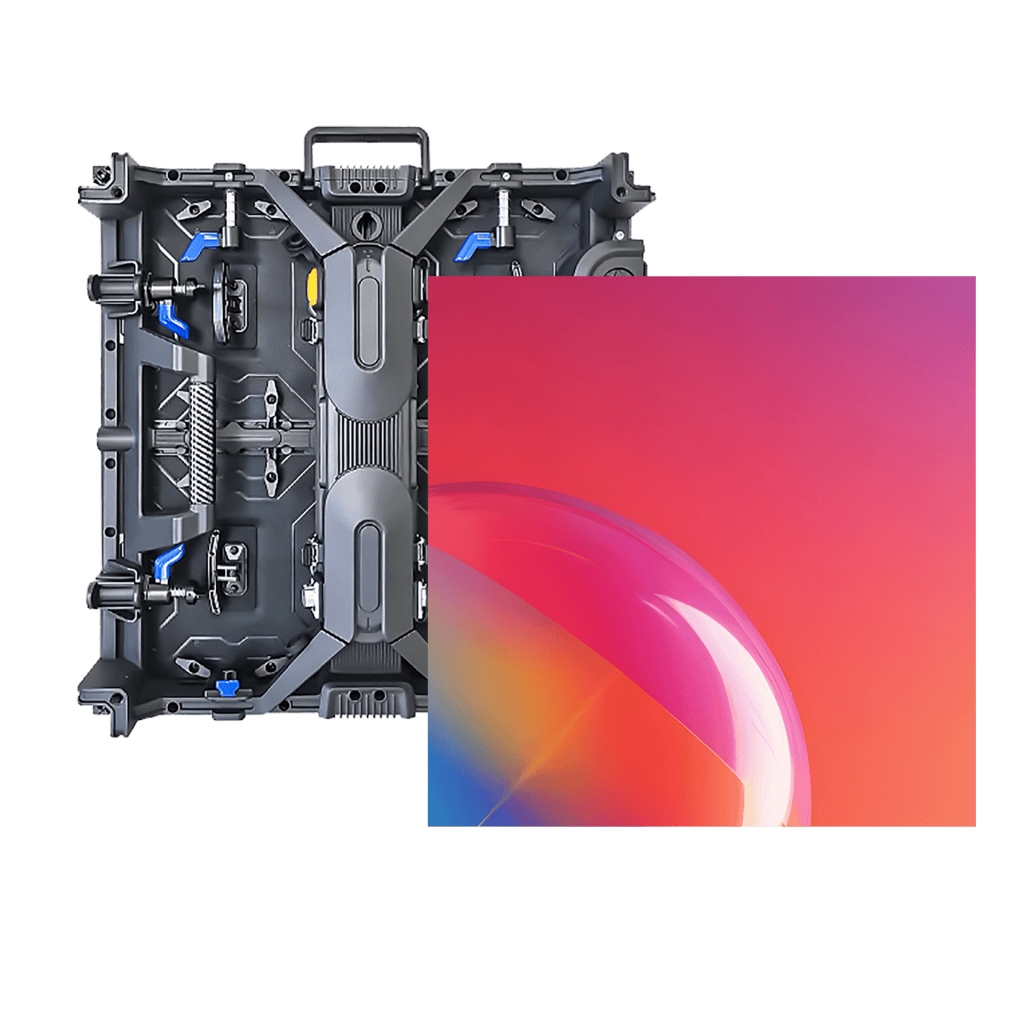
COB stands for Chip-on-Board. Instead of packaging each LED chip individually and then mounting it, COB places multiple bare LED chips directly onto the circuit board. The entire array is then sealed under a continuous layer of epoxy resin, creating one smooth, unified surface.
Think of SMD like a tiled floor — individual pieces laid next to each other. COB is more like poured concrete — one continuous, seamless surface.
That structural difference changes everything about how the display performs.
The real-world benefits
Better image quality up close
Because the chips are sealed under a smooth surface layer, COB displays act as a surface light source rather than a collection of point sources. That means less glare, more uniform brightness, and a cleaner image, even when viewers are standing just a few feet away. COB displays can achieve contrast ratios above 20,000:1, compared to the 10,000:1 ceiling that’s typical with SMD.
Finer pixel pitch
COB technology handles ultra-fine pixel pitches (P0.9, P0.6, even finer) more easily than SMD. That makes it well-suited for high-resolution applications where the screen is viewed at close range, like boardrooms, control rooms, and broadcast environments.
Better durability
The epoxy resin layer that seals a COB display protects the chips from dust, moisture, and physical impact. This makes COB a stronger choice for high-traffic environments or anywhere reliability is non-negotiable. Failure rates are significantly lower compared to SMD.
Improved heat management
Direct mounting onto the circuit board gives COB displays a more efficient path for heat to dissipate. That translates to more stable performance over time and a longer overall lifespan.
Where COB makes the most sense
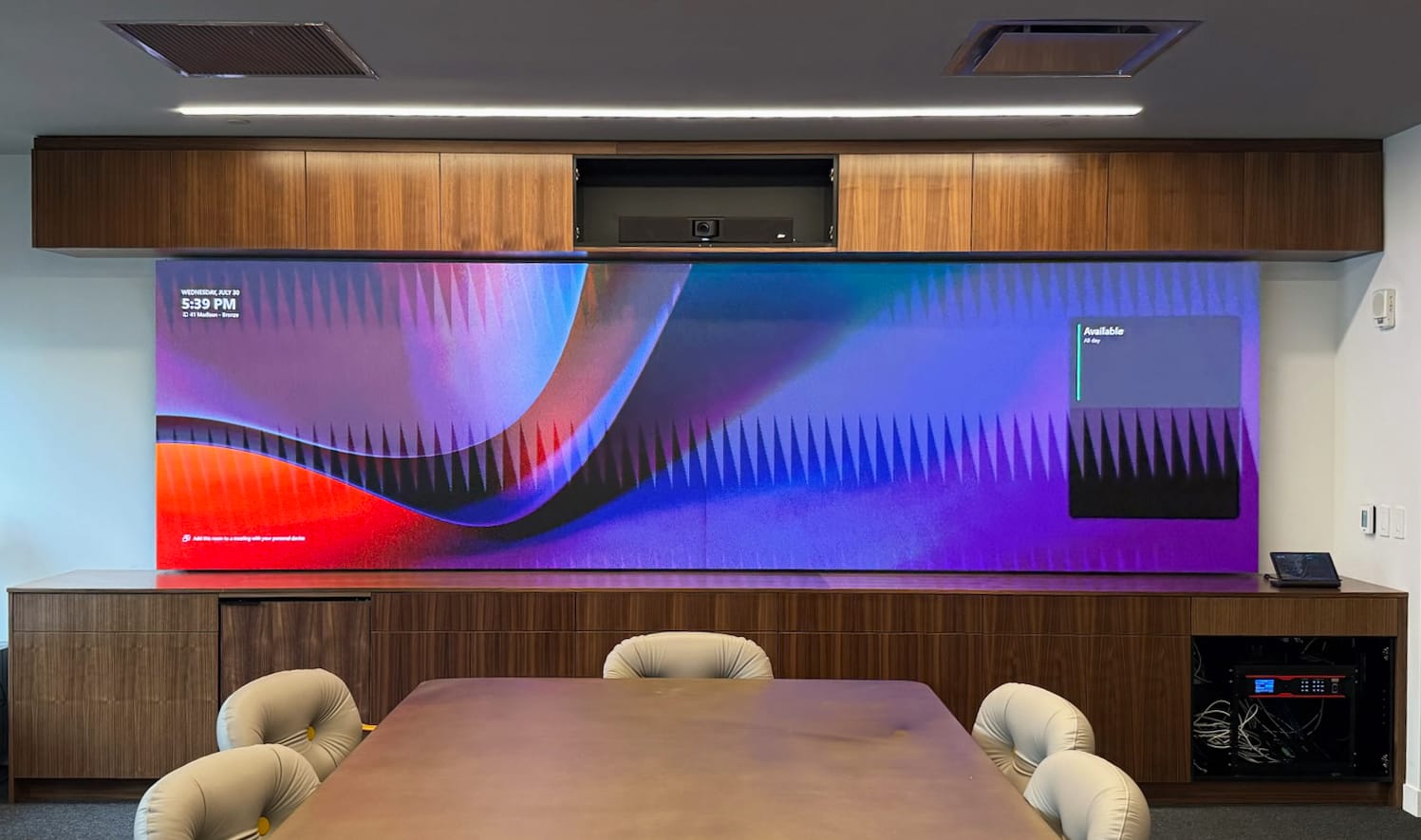
COB is the right call when image quality and durability are the priority — not just upfront cost. That includes corporate boardrooms and executive briefing spaces, broadcast and XR/virtual production studios, command and control centers, high-end hospitality and venue installations, and anywhere the screen will be viewed at close range on a regular basis.
SMD still can make sense for large-format outdoor advertising, rental and staging applications, and projects where budget is a primary constraint and viewing distance is generous.
One trade-off worth knowing
COB displays typically cost more upfront — generally in the range of 10–20% more than comparable SMD displays. They’re also harder to repair in the field. Because the chips are embedded in resin, on-site fixes are more difficult and some extensive repairs typically require sending the module back to the manufacturer. For most buyers investing in COB, the lower failure rate offsets this. But it’s worth factoring into your decision.
Where the industry is headed
COB has been the talk of the industry heading into 2026. At ISLE, one of the biggest global LED trade shows held in March, COB and MIP emerged as the two dominant technology directions for next-generation displays. Manufacturers are pushing pixel pitches smaller and costs lower, which means COB is moving from a premium niche into the mainstream faster than most people expected.
If you’re buying a display today with a 10-year horizon, COB is worth serious consideration.
The short version
COB LED seals multiple chips directly onto the board under a protective resin layer. Compared to traditional SMD displays, you get better image quality at close range, finer pixel pitch options, stronger durability, and more efficient heat management. The trade-off is a higher upfront cost and more complex repairs.
For buyers prioritizing long-term performance over short-term savings, COB is increasingly the answer.